Lichfield, Staffordshire. Spring, 2022
A walk around Stowe pool, a beauty spot with residential ducks, visiting geese and a profusion of plants growing near the water. I paused on the path, my attention caught by some wildflowers. Which were actually weeds: dead nettles, so-called because they do not sting, with heart-shaped, saw-toothed leaves and little pink blooms, but described as red or purple, my friend said, because in the past ‘pink’ – as the name for a colour – was unknown. In the Middle Ages, ‘pinken’ meant to prick or to pierce and the flower we call a pink took its name from the serrated edges of its petals…
There’s still something elusive about pink; some say it’s not a true colour at all, certainly not a single shade, because it’s outside the spectrum. There’s no pink in the rainbow. And to see it, the human eye has to blend other wavelengths of light, while Nature makes its own magical mixture of pigment and chemical to bring us not only pink but all the colours of the roses, tulips, hibiscus, hydrangea….
A botanical truth: colours exist to attract attention to themselves. Bright berries and flowers spell food to insects, birds and butterflies, keeping the natural world turning. For us too, the colour of things is a signalling system, albeit a sometimes ambiguous one, but the basic ‘law of attraction’ still applies. Some colours are just more ‘come hither’ than others – and our heroine is one of them.
It wasn’t till the 1700s that this paler shade or red or purple – but more luminous than either – became a colour in its own right. This progress of pink began in a factory in France, when the porcelain-makers of Sèvres named the subtle pastel used in its wares Rose Pompadour – a graceful compliment to the mistress of Louis XV, Madame de Pompadour, a frivolous but cultured creature who made the wearing of it fashionable, securing its place in history.
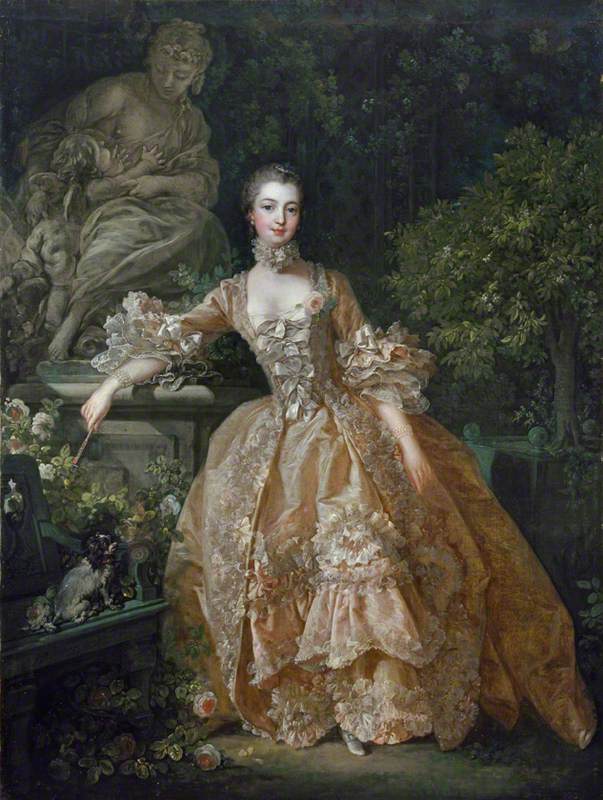
The liaison between pink and people in the public eye was to be a lasting one. I met another grande dame once whose relationship with louder, more look-at-me shades of pink was part marketing ploy – to plug the sake of her books – part philosophy.
St Albans City Hospital, Hertfordshire. c.1960
My job as a general dogsbody was about to be brightened by an encounter with someone very famous, though I didn’t know who she was at the time. The teenage me was stacking boxes on a shelf when I saw a vision advancing down the corridor in my direction. A large one, dressed head to toe in a shocking shade of pink, from feathered hat to determined handbag, who said something gracious to me in passing then swept on and away. When I told my mother, she was thrilled. The Pink Lady turned out to be an acquaintance of hers, a champion of good causes, from the rights of gypsies to the welfare of patients in Napsbury, the local mental asylum. Barbara Cartland, the author of hundreds of romantic novels, who said ‘a woman should always dress for love’…even, it seemed in a hospital corridor!
Hers was a pushy pink, not to everyone’s taste. ‘A bit common’, my mother called it. But even in quieter moments, pink seems to lend itself to publicity, even excess. Its feminine associations made it the ‘natural’ choice for breast cancer awareness campaigns and for all the pretty products that come with them, while other less media-friendly colours – and other forms of cancer – seem to struggle for attention…
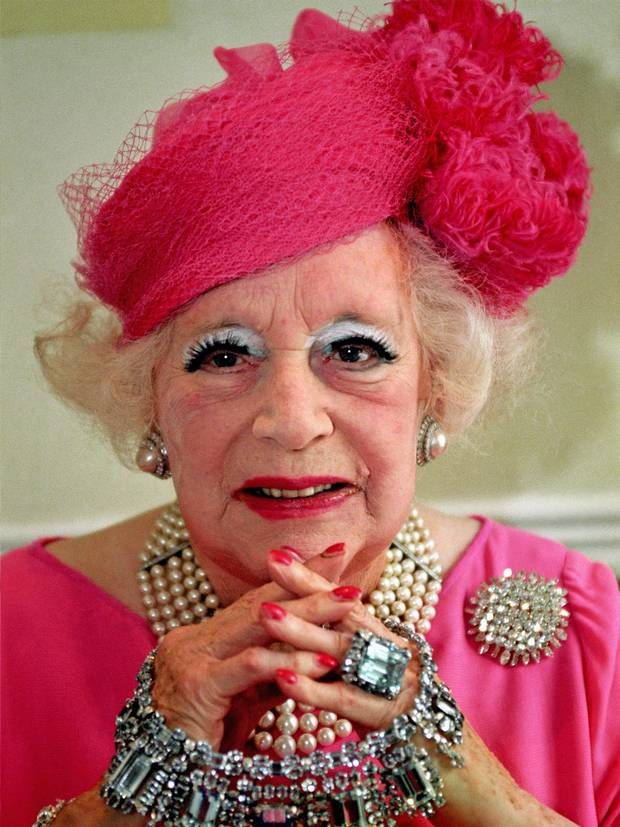
So it’s the celebrity side of pink that helps explain its supple reputation. Flattering and pleasing, it sells and sells. It’s a Disney princess, Barbie Doll. And yet when worn or depicted in a delicate shade, it’s also the uncommercial colour of youth and innocence. Today’s baby in a buggy dressed in pink is still likely to be a girl, but the little boys in 18th century paintings in rosy satins and silks seem to prefigure a future where traditional colour associations and gender boundaries would weaken, shift and blur. Where – in a nice subversion of its girlie image – men would play rugby in pink and wear it well.
A millennial I know, who likes to keep me up to date, says that these days pink is ‘progressive, empowering’…. I think she means that if you can be whoever you want to be – man, woman or anything in-between, you can wear whatever colour you want…
‘You can,’ an older fashionista friend agrees, but it has to work with your skin-tone.’ Hers is cool, so she looks great in raspberry or cherry; I suit a tea-rose or subdued salmon. Anaemic or apoplectic shades aren’t good on anyone, but ‘when you wear your best pink, nice things tend to happen…’
Pink, of course, has its own relationships – with other colours. It’s always added a little heart to white, a seductive edge to black – but a light to medium pink also has a way, in an outfit or a room, of balancing other colours in a scheme, making it a modern neutral – a better base than beige, as good as grey. Khaki or camel come alive in its company, while its own natural sweetness is soon sharpened by a touch of spice or something sour. Pink, meet lime, mustard or ginger…
This is to play with pleasant distinctions, to roam on safe, uncontended ground. Elsewhere, in other contexts, other places, this is a colour that’s challenged the attitudes of everyone around it. And for one terrible, immeasurable moment, pink was the instrument of evil, when wearing it was not a choice at all but – in a perversion of its appeal – a punishment.
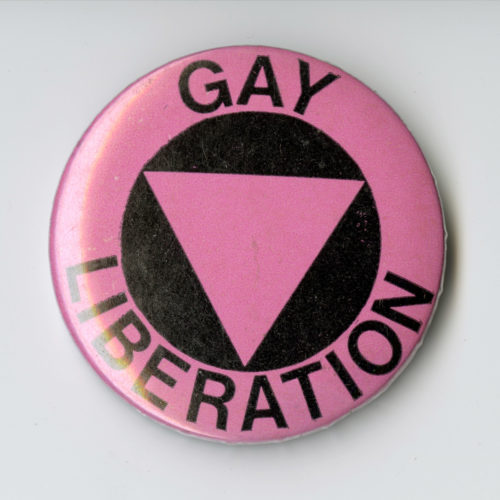
Pink has been political for a very long time. On old maps it was the British Empire, colouring vast swathes of the world, celebrating its power. The pink adopted by today’s Pride and other liberation movements has the darkest of origins – in the triangle that pointed to the ground, the symbol used in the camps of Nazi Germany, to shame and identify gay and other ‘unreproductive’ prisoners. So the way we see pink turns on time and space and the people who occupy it. While ‘pinkness’ itself is inseparable from the articles perceived as pink, from the surface to the inside of things, including the human body.
It’s an inescapable connection, because pink is part of us. Healthy tissues in the mouth or an organ wall or under a fingernail…. as well as the scars all flesh is heir to… which leads, unfortunately, to plasters and bandages, dentures, calamine and the average pimple… then swiftly back to the more romantic, sensual side of the skin and then at last to the physical and spiritual centre of the self: the heart.
No other colour has quite the emotional pull of pink, one of the secrets of its success. It can ignite a passion to last a lifetime.
A local hairdresser’s. September, 2022
While the orange streaks were ‘cooking’ in pieces of foil on my head, I looked through a pile of celebrity magazines – the Hello! or Heat variety – and picked up one called Closer, where I found a feature about an event in Las Vegas and a woman who loved pink so much she married it, ‘in front of 40 friends and family’. The first person to marry a colour, arriving in a cadillac that once belonged to Elvis. The car, the cake, bride and attendants all in eye-popping shades of pink, naturally. Crazy, pathetic, beyond kitsch – or more a case of taking this life less seriously? What would Madame or Barbara have made of it all?
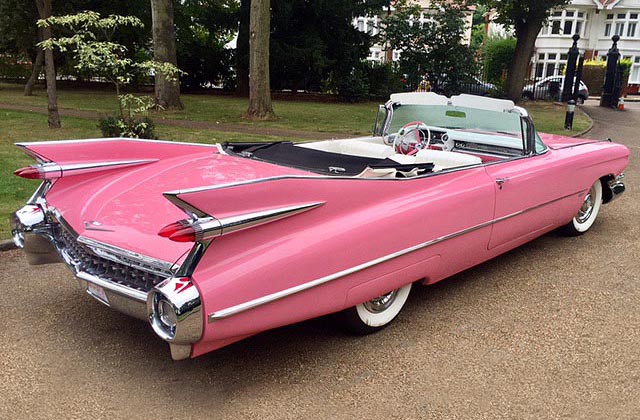
When I mentioned this story to a fanciful friend, she said it wasn’t only people who ’embraced the positive energy of pink’, angels and fairies were fond of it too. It also reminded her of Tracy Emin, who stood in her garden in France and married something much older than she was, paleolithic, in fact. A large grey stone that ‘wasn’t going anywhere and would never let her down’… Both ceremonies illegal – because an inanimate object can’t make vows and a colour can’t sign a contract…
These are the farthest shores of affection. The rock wedding, however, led to a third tale of the unexpected – a discovery in a desert.
Pink is not only wistful and defiant, inviting and ambiguous, it’s also very very old. An imaginary moment first in the ancient rose-gold city as yet unvisited but on the List: Petra, which means ‘rocks’. And from there to Africa, where scientists have found the oldest biological pigment of them all, deep under rock in the Sahara, formed billions of years ago by organisms in a long-vanished ocean. A bright and beautiful pink! The first colour, the one that came before us all.
There was once a sea-god called Proteus, the son of Oceanus, who could change shape at will, assuming any number of forms, making him hard to capture… In too many shades to count, our colour too is fabulously mutable. The shifting perceptions of pink have had a paradoxically permanent effect – it will never go out of fashion or for long out of our sight.
Because they’re made of movement and light and disappear in the dark, colours are all immaterial, but pink has an especially aerial quality implicit in the short and swift word itself. Some colours, like grey or the duller shades of brown or blue seem to feel a bit sorry for themselves; pink has wings. Which makes it not only a colour but a mood-changer, a state of mind – in which we view the world, not through rose-tinted glasses – another optical illusion – but just with a more open, hopeful heart…
It is thought that pink acts on the brain, like a natural tranquilliser. There have been experiments in American prisons, where the walls of cells and corridors were painted pink, to keep the inmates calm and under easier control, but some of the men didn’t want their aggression dampened by the decor and complained it made them feel emasculated,apparently, so the results were inconclusive…
Whatever its effects, it’s the perennial prettiness of pink that secures its place in our affections and its hold on the popular imagination. That and the warmth of its ‘personality’. The most difficult decisions of the day – what to say to the neighbours or the boss, what to do next, how to make the world a better place, who – or what – to marry – are best taken in the company of a complex character, neither red nor white but a perfect in-between… One of mankind’s most divine creations. A dry rosé.
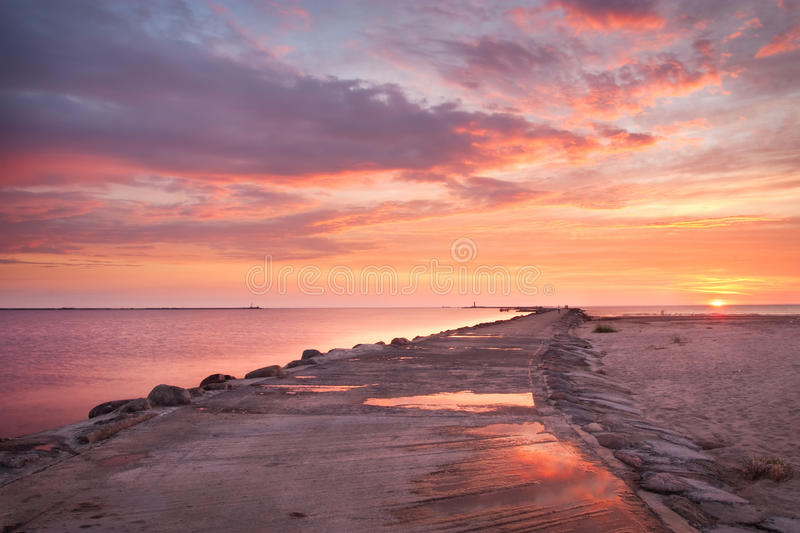
Which opens a last door, back into the natural world and unconfined space, to find the fairest pinks of them all. After the winter, the cherry and apple blossom of spring, then the strawberries and cream of summer. And the other great, reassuring rhythms of Nature, seen by someone somewhere at the beginning and end of every day. Homer’s ‘rose-fingered child of the morning’, a flamingo sky at night. Sunrise, sunset.
 Pensionista
Things we take for granted.
I have never thought about how colours evolved.
I love pink, not the candy floss variety, more dusky pink.
Once again your research on this unusual subject is immense.
The piece you have written is wonderful. I have learnt how fascinating the topic can be.
I am now looking forward to the next pink sky at night, shepherds delight.
Elaina
LikeLike
Thank you for the comment, Elaina – have left a reply. ________________________________
LikeLike
Absolutely fascinating and so well written. Saving this to read again. I will look through my sketch books again where I know there is some pink and place it in the context of your piece here.
Thank you Tess.
Peter
LikeLike
Thank you for the comment – have left a reply. Tess X ________________________________
LikeLike
A beautiful piece of writing. So informative and thought-provoking
LikeLike
Thank you, Pat – have left a reply. love, Tessa ________________________________
LikeLike
Thank you for these comments, which are encourage me to keep going! The readership of the site is slowly growing, but few actually make a written response on any forum….
LikeLike